AromaTech
AromaTech
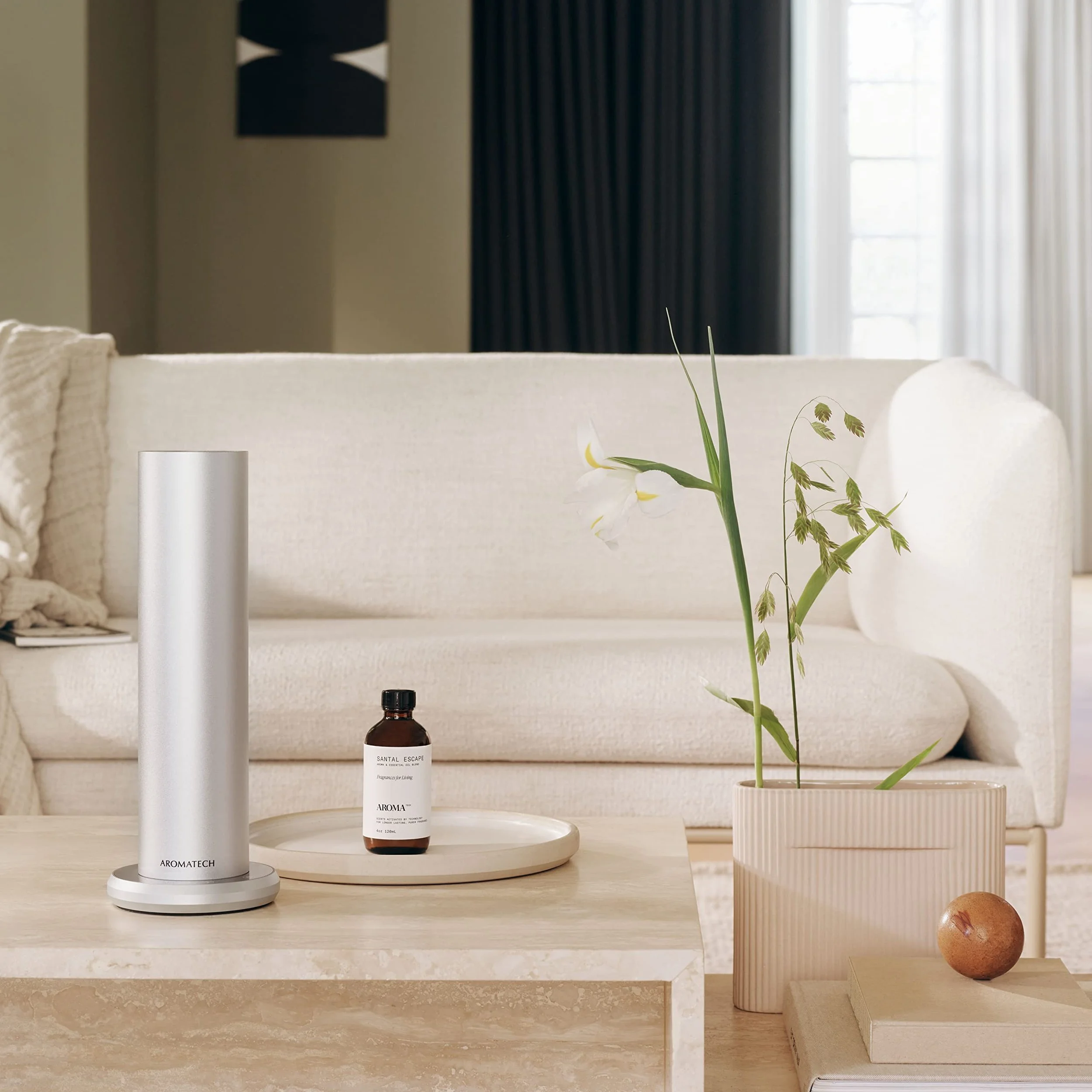
A development partnership that turned a scent brand into a range of objects.
From sketch to shelf, together.
Client · AromaTech
Sector · Home & personal fragrance
Services · Industrial design, mechanical engineering, electronics, firmware, DFM
Engagement · Ongoing development partnership

01
The challenge
Scent is a category built to sell what runs out. The refill is the business, and the device that holds it has too often been treated as a giveaway, a plastic housing designed down to a price and indistinguishable from the shelf beside it. That logic breaks the moment a brand wants to be bought for the object as well as the oil.
Customers notice a thin object
Presence needed across home and car
Products designed in isolation fragment
Every form factor carries its own tooling
Its own electronics and supply chain
Intentional and buildable, at once
The approach
02
The organising idea was to stop designing products and start designing a platform. At the centre sits the Shared Core, a common scent delivery and control module engineered once and carried across the range. The Core holds the parts that are hard to get right: dosing behaviour, the sealing that keeps fragrance where it belongs, and the firmware that meters output quietly.
One core, engineered once
Dosing behaviour proven and reused
Sealing that holds fragrance in
Firmware that meters output quietly
New products inherit performance
Form free to change around it
The outcome
03
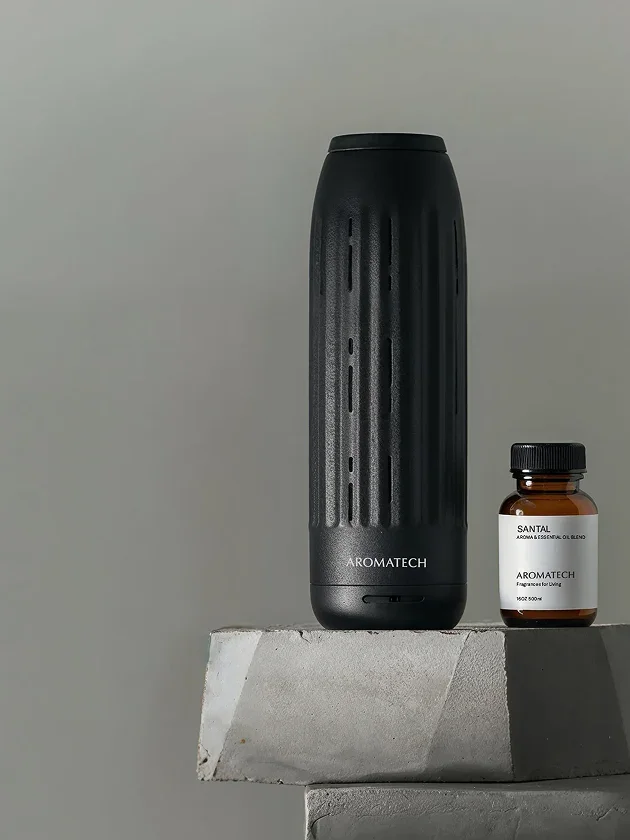
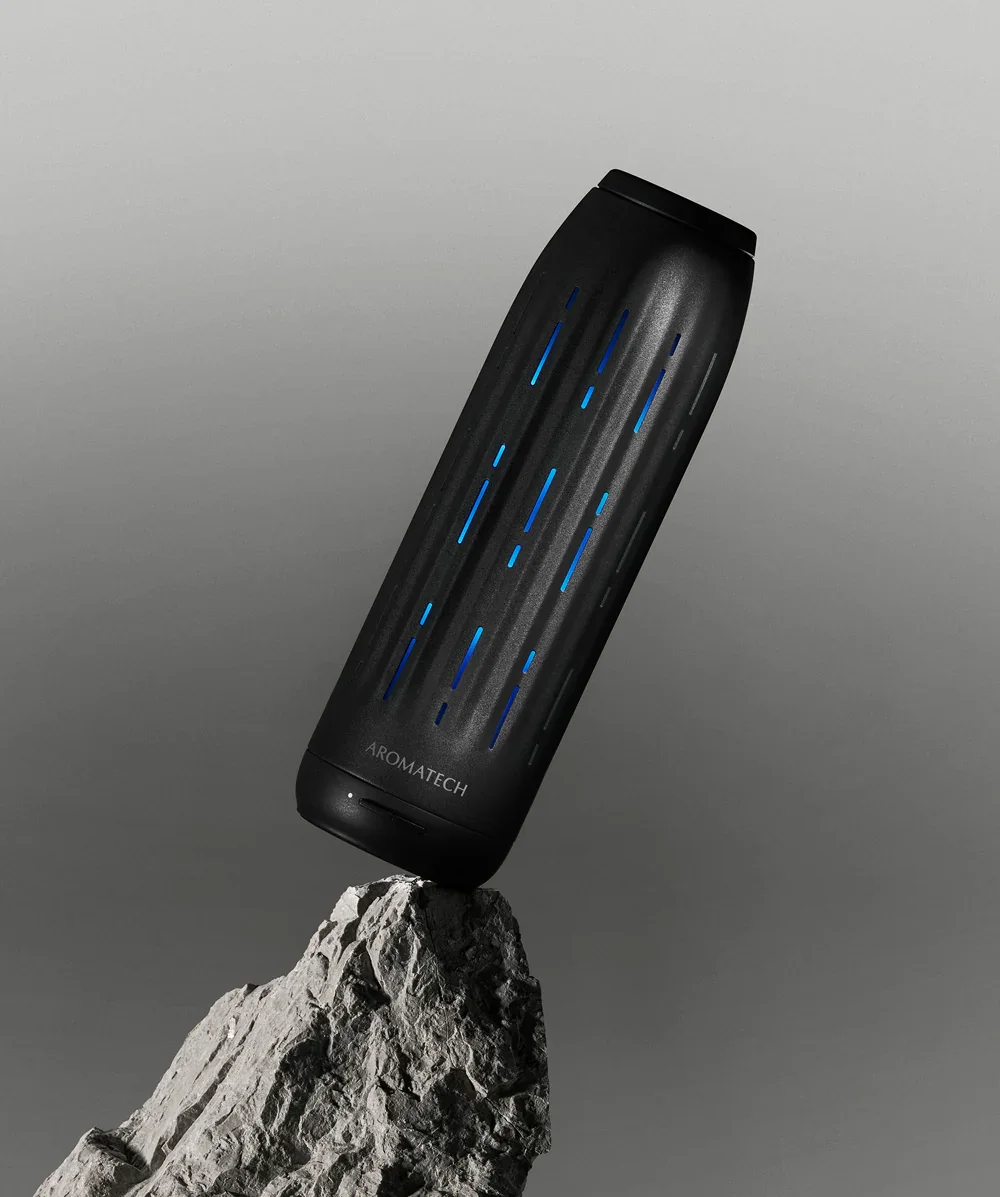
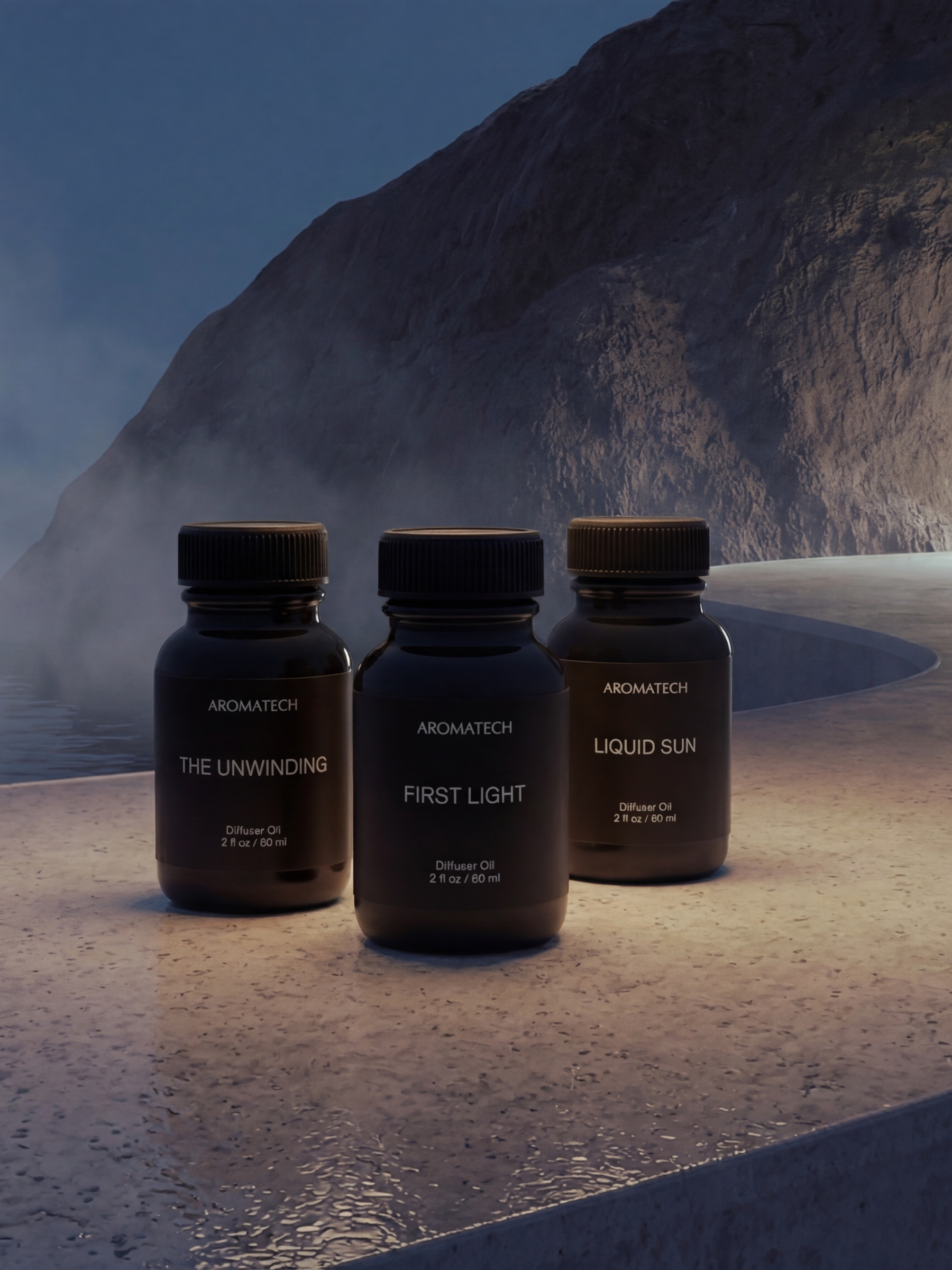
Around that constant the range is free to change. A room device and a compact personal one can look entirely different, sized and surfaced for where they live, while sharing the engineering that makes them work. The design language ties them together as siblings rather than clones, and each new entry moves faster from sketch to tooling.
Coherence the customer can feel
Engineering risk settled once
A line-up that compounds
Family resemblance, not a uniform
Faster from sketch to tooling
Falling cost with every release

04
Our role
Enki led the programme end to end across industrial design, mechanical engineering, electronics and firmware, and design for manufacture. We shaped the range architecture and the Shared Core platform, developed the form language that holds the family together, and carried the work through to sourcing guidance, supplier selection and manufacturing readiness.
“A good range is not a set of products that match, it is a set of decisions that agree, and the object on the shelf is only the last place you see them.”
Ben Jones, Founder, Enki Product Development
Range architecture
Shared Core platform
Industrial design and form language
Mechanical engineering
Electronics and firmware
Sourcing and manufacturing readiness