
Validate the market, the customer, and the business case before a single sketch is drawn.
Design, Technology & Market Research
Know what to build before you invest in building it
Design, Technology & Market Research
Know what to build before you invest in building it
“Research is not a report you commission. It is the stage where the expensive decisions get made cheaply.”
Ben Jones | Founder, Enki


What we do
Market analysis
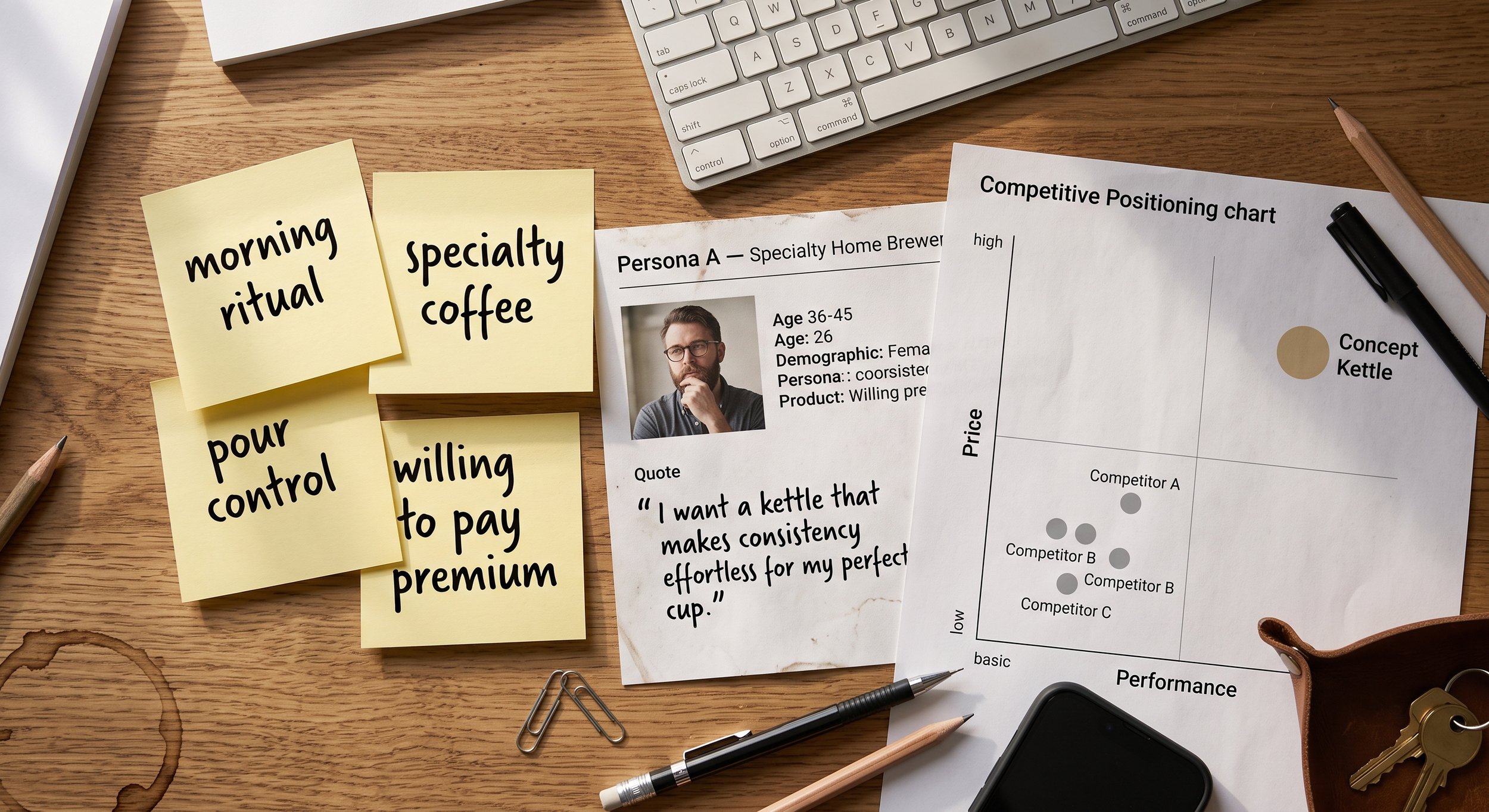
We map the competitive landscape, identify the white space and assess whether the opportunity is real. You get a clear picture of where your product sits, and what it has to beat, before you commit capital.
User & customer research
We go beyond demographics. We study how your customer behaves, what frustrates them and what they will actually pay for, so the product you build is the product they want.
Technology feasibility research
We establish what is technically possible before you commit to an approach. Choosing the right technology now is the difference between an engineering programme that converges and one that restarts.
Commercial validation
We stress test your idea against real world cost, pricing and manufacturing constraints. If the numbers don't work, we tell you now, not after the tooling is paid for.
Why it matters
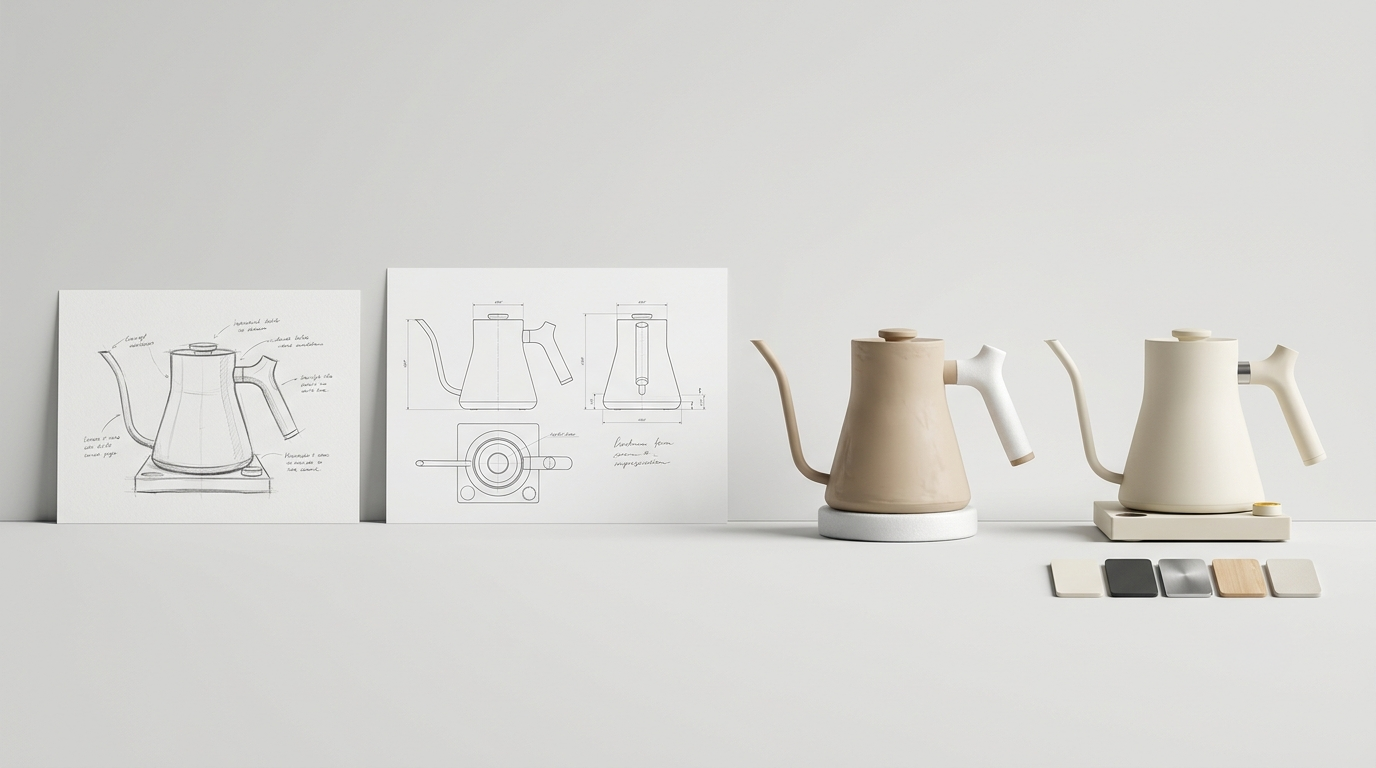
Research isn't a phase you skip to save time. It's the phase that protects everything you spend after it.
Research isn't a phase you skip to save time. It's the phase that protects everything you spend after it.
Products come apart for a small number of reasons, and they repeat. The market wasn't there. The pricing was wrong. Or the technology chosen at the outset could never deliver what the product promised.
Founders usually arrive with conviction, and that conviction is valuable. Testing it is what protects it. The technology risk is the most expensive of the three, because it doesn't surface in week two. It surfaces nine months later in detailed engineering, when the cost is already committed and the only options left are compromise the product or start again. Our engineers spent their careers at Dyson making these calls. Our job isn't to challenge your vision, it's to make sure the evidence supports it before the real spending starts.

How We Work
01
Scope the question
Every Discover project starts with a clear question. What do we need to know, and what decision will the answer inform? We define the scope before any research begins, so the output is actionable rather than academic.
02
Gather the evidence
We use the right method for the question: competitor teardowns, user interviews, market sizing, pricing analysis, technology benchmarking, trend mapping. No boilerplate methodology. The approach fits the project, not the other way around.
03
Translate to a brief
Research without application is a report that sits in a drawer. We turn the findings into a clear product brief: what to build, for whom, at what price point, using which technology, and why. That brief becomes the foundation for every design and engineering decision that follows.
-
It depends on scope. A focused competitive analysis might be a few thousand pounds. A comprehensive market validation study with user research, pricing analysis, and commercial modelling sits higher. We scope every engagement transparently — you know the cost before we start.
-
You can, and many founders do. But there's a difference between googling your competitors and conducting research that genuinely de-risks a £100k+ development investment. We bring objectivity, methodology, and experience across 80+ products — we know what to look for because we've seen what goes wrong.
-
Especially then. The stronger your conviction, the more important it is to test it. Research doesn't exist to kill ideas — it exists to sharpen them. The best outcome is usually a refined version of what you already had in mind, backed by evidence that gives you and your investors confidence.
-
It's the first stage of our 5D framework — Discover. The research outputs feed directly into Define, where we shape the product brief. Because the same team handles research and development, nothing gets lost in translation between an external research agency and your design team.
Frequently Asked Questions