Cura Halo
Cura Halo
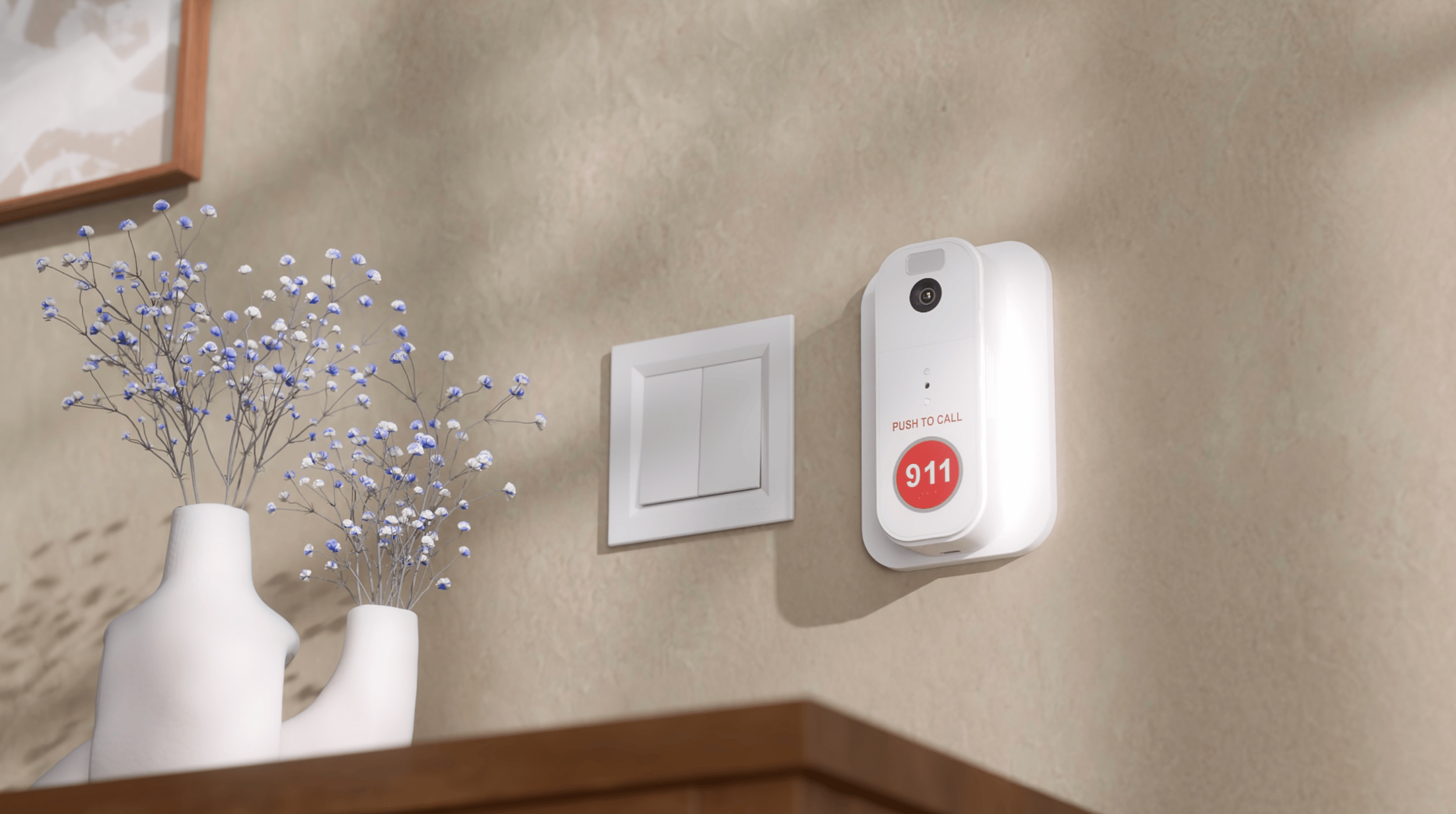
Emergency help at the height of a child, one press from the wall.
Help, at the height of a child.
Client · CuraHalo
Sector · Home safety & connected devices
Services · Industrial design guidance, factory sourcing
Engagement · Delivered in collaboration with Gembah
01
The challenge
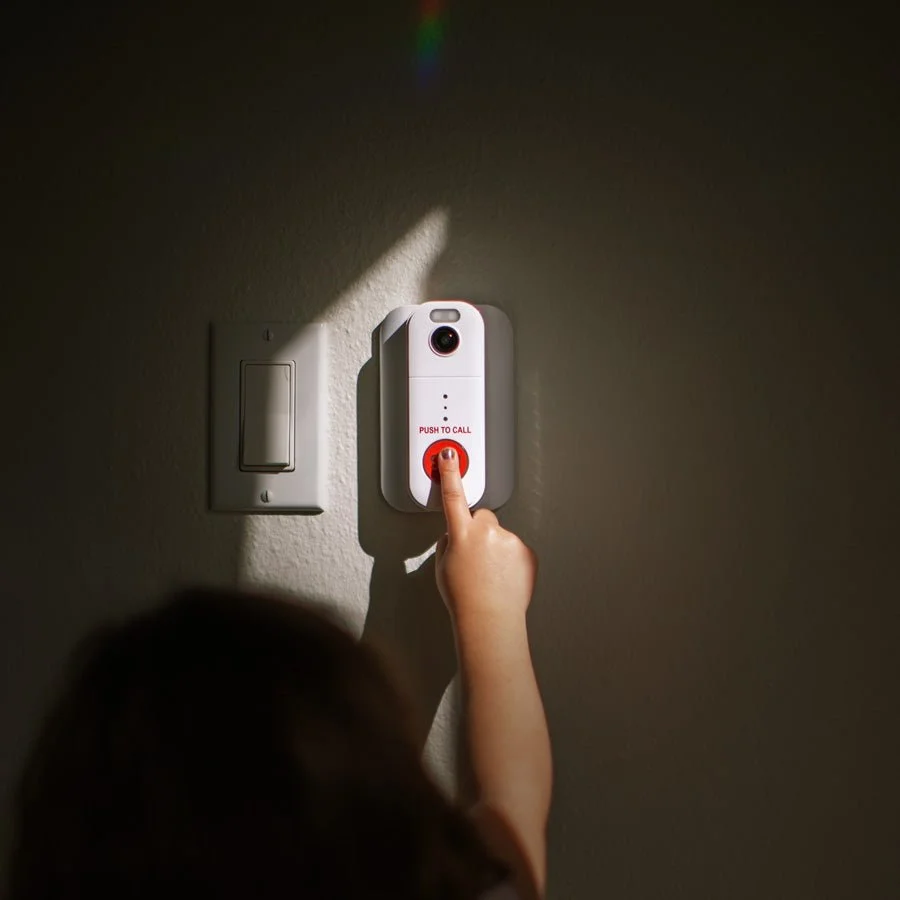
Home emergency systems have spent decades optimising for the wrong user. Alarm panels sit by the front door behind a code. Smartphones assume the caller can unlock a screen, find the dialler and stay on the line. Smart speakers need a wake word and a calm voice. None of that works for a six year old who has found a parent on the floor.
Mounted at the point of need
Wi-Fi connected, battery powered
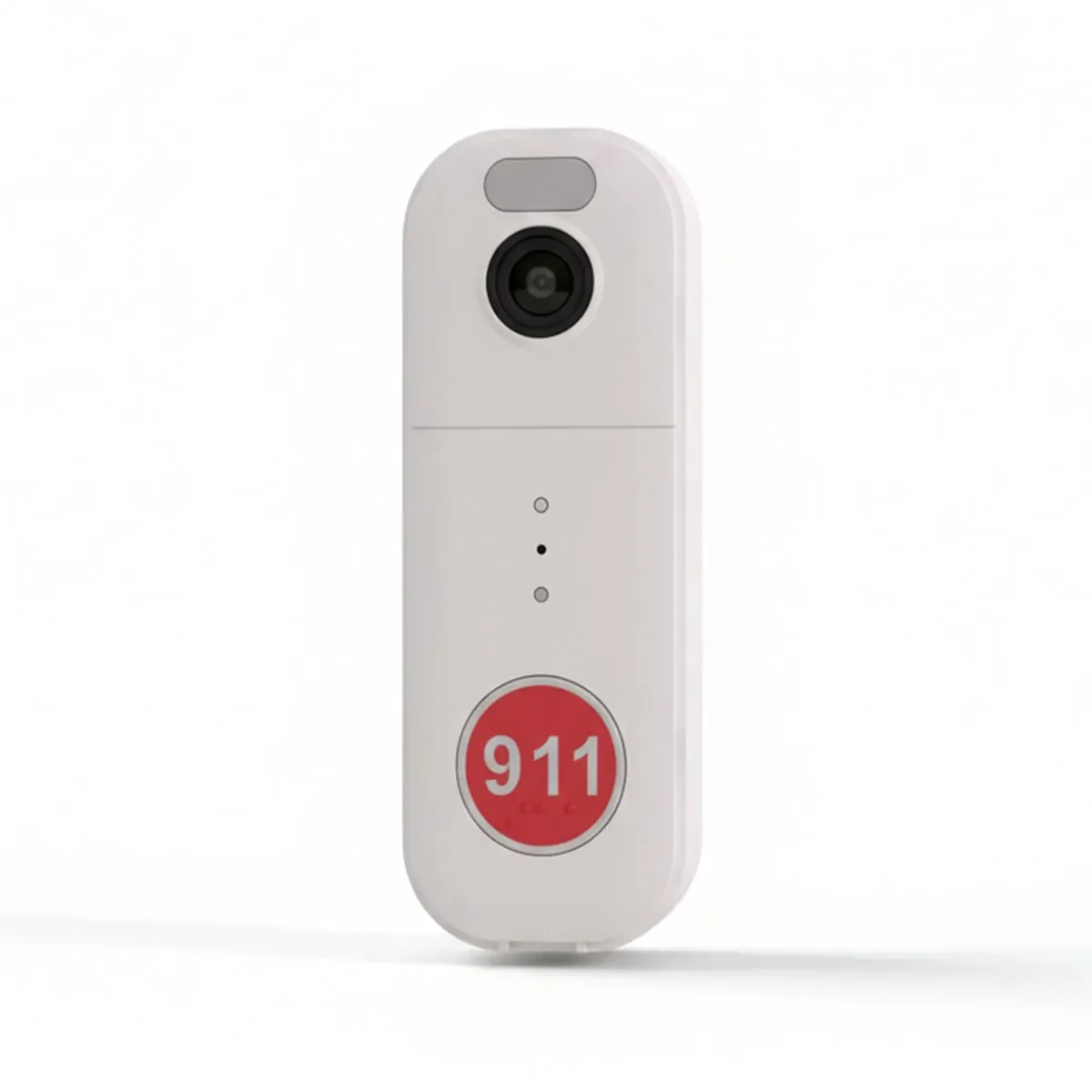
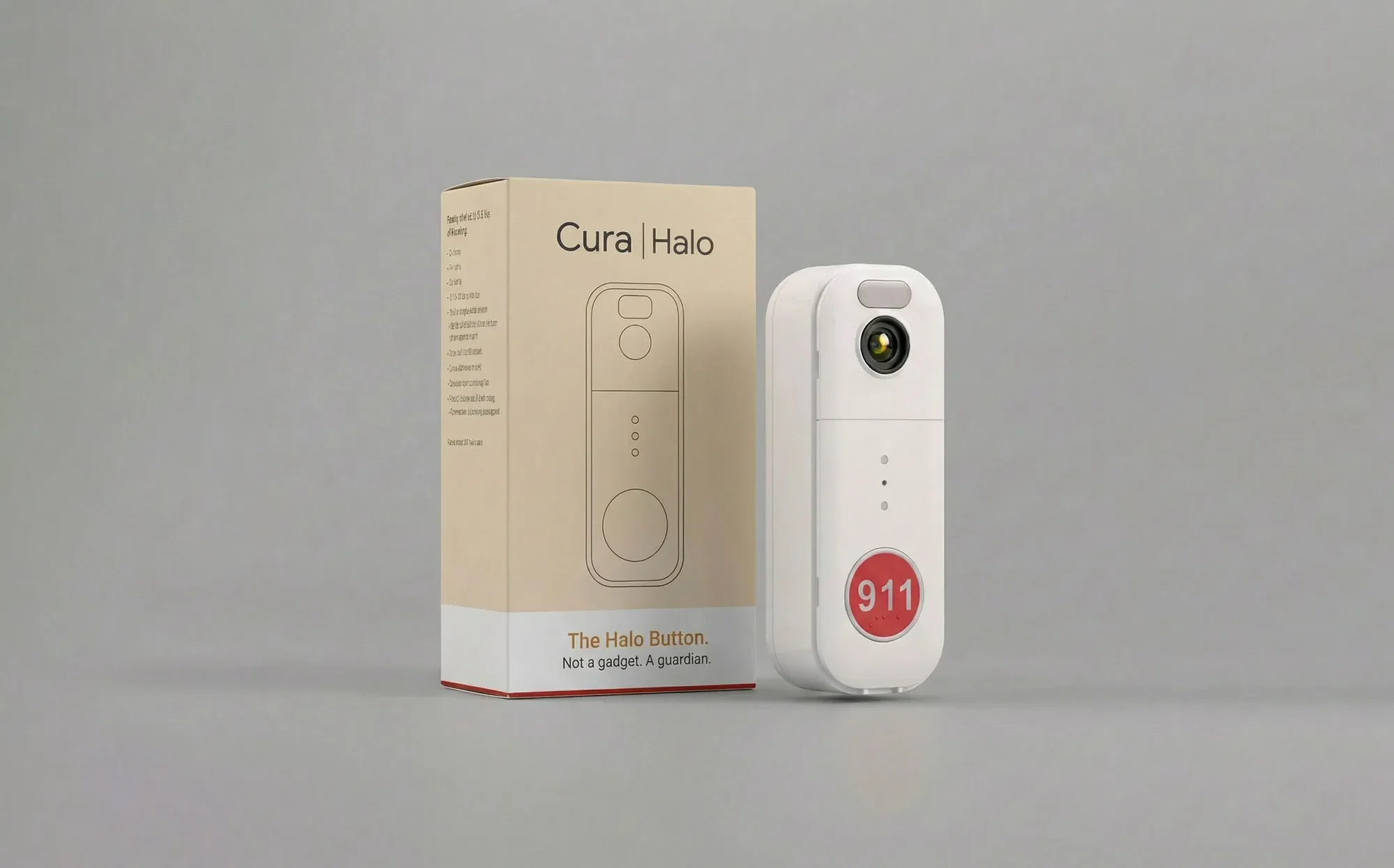
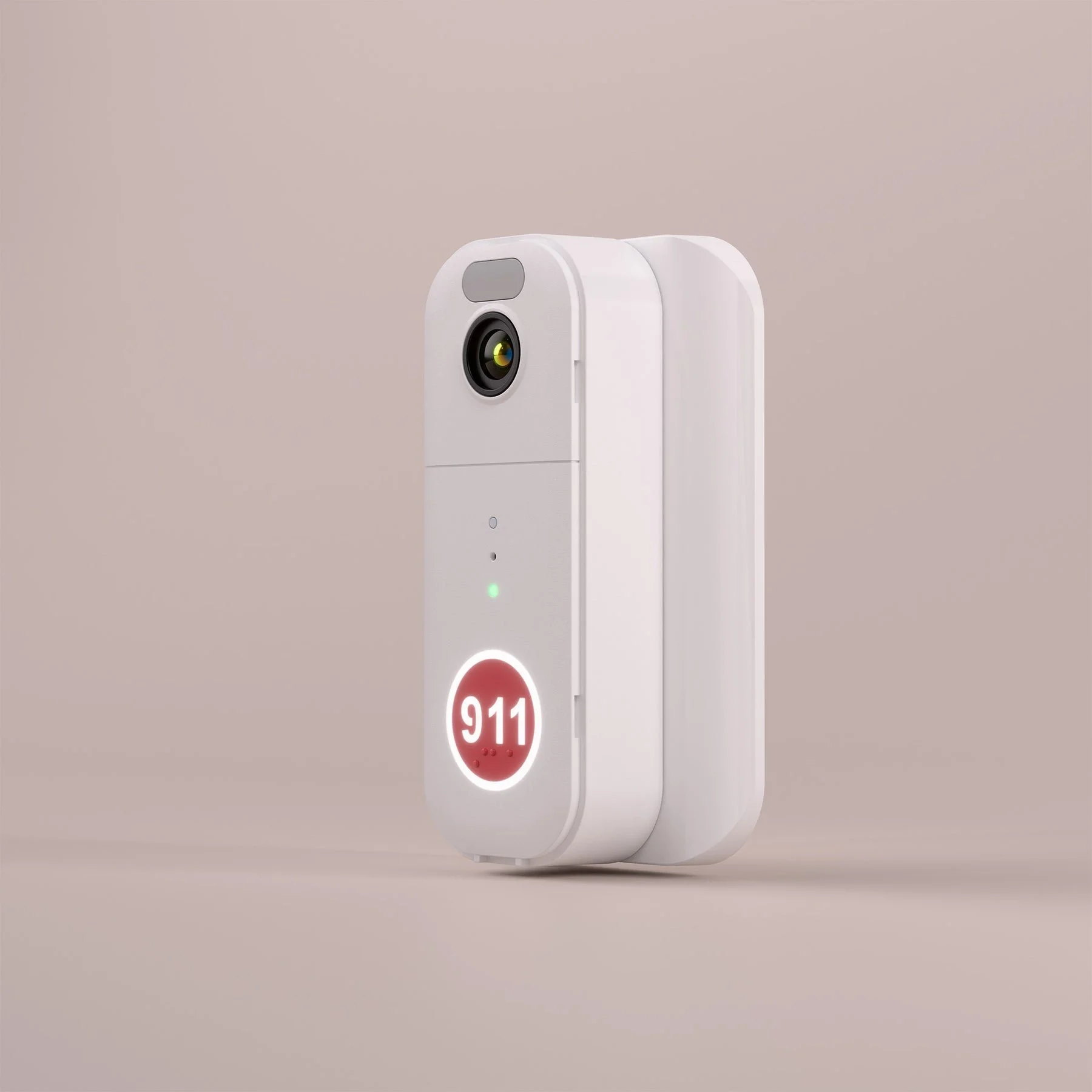
Camera with a magnetic Privacy Cover
Five to thirty second countdown
Domestic, not institutional
A first time hardware founder
The approach
02
The Halo Button is built around what CuraHalo calls the Context Layer: a system that bundles household data, exact location, gate and entry codes, household size, resident names, spoken languages, allergies and medical notes, and delivers it alongside live audio and video the moment a 911 connection opens.
Live video and two way audio
Household context sent with the call
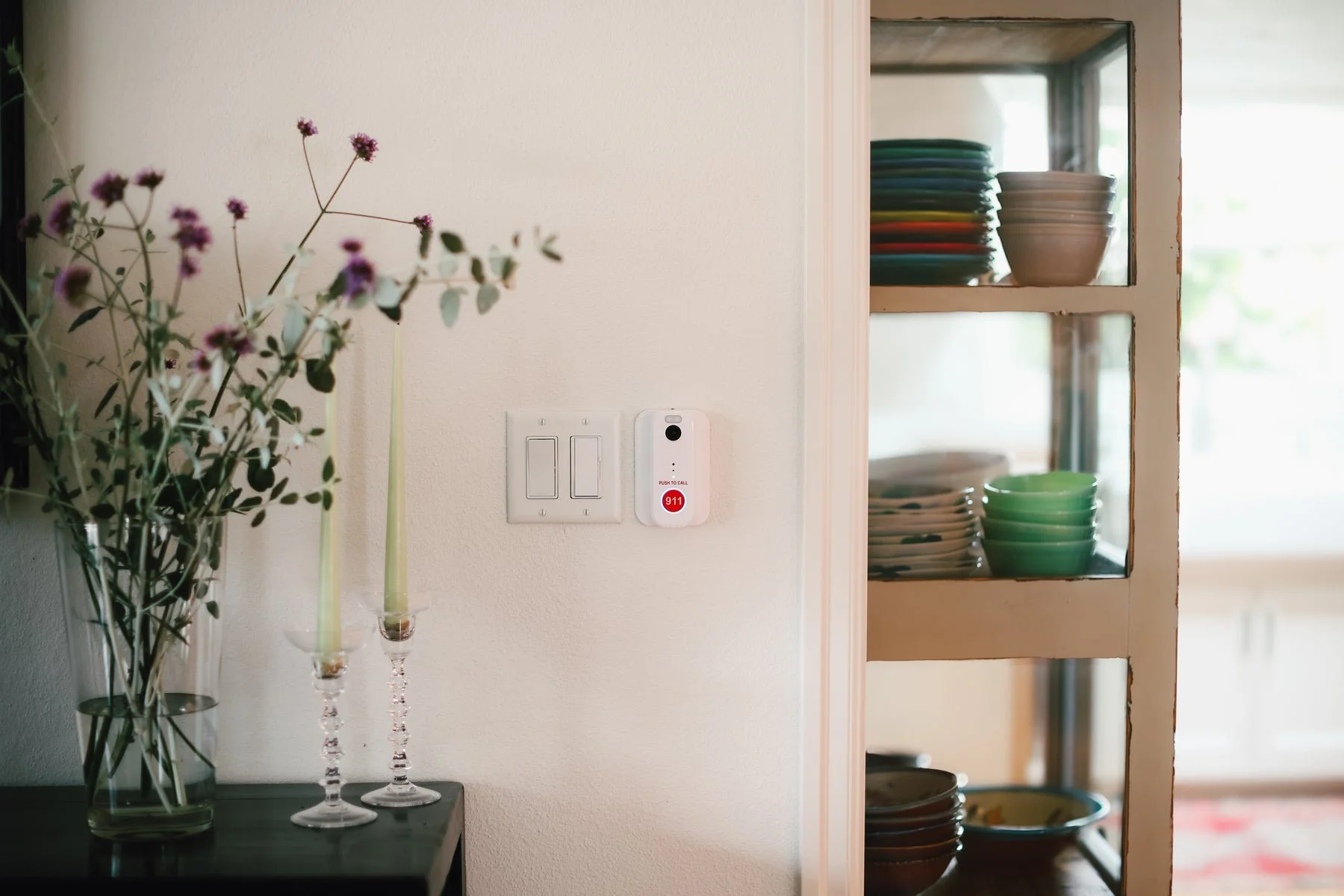
A compact wall mounted puck
Two wall cradles supplied
Magnetic Privacy Cover
Out of Service cover for maintenance
The outcome
03
The form factor had to read as domestic rather than institutional, which meant the housing, the button profile and the cradle mounting all needed to feel as considered as a thermostat or a light switch. The interaction is deliberately reductive: one button, one action, one outcome. A child who can reach the wall can reach help.
Button profile resolved for reach
Cradle mounting detailed
Every decision protects the simplicity
One button, one action, one outcome
No menu, no PIN, no screen
Housing as considered as a thermostat
04
Our role
Enki supported the design and development of the Halo Button, providing industrial design feedback and guidance through factory sourcing in collaboration with Gembah. Ben Jones and John Sudul worked directly with founder Reed Rosenberg, helping a first time hardware founder navigate the critical path to manufacture.
“Ben and John have been fantastic to work with. Fast, diligent, and very pleasant throughout the process.”
Reed Rosenberg, Founder, CuraHalo
Industrial design feedback
Form and housing guidance
Factory sourcing support
Critical path to manufacture
Delivered with Gembah
Direct founder collaboration