HexClad
HexClad
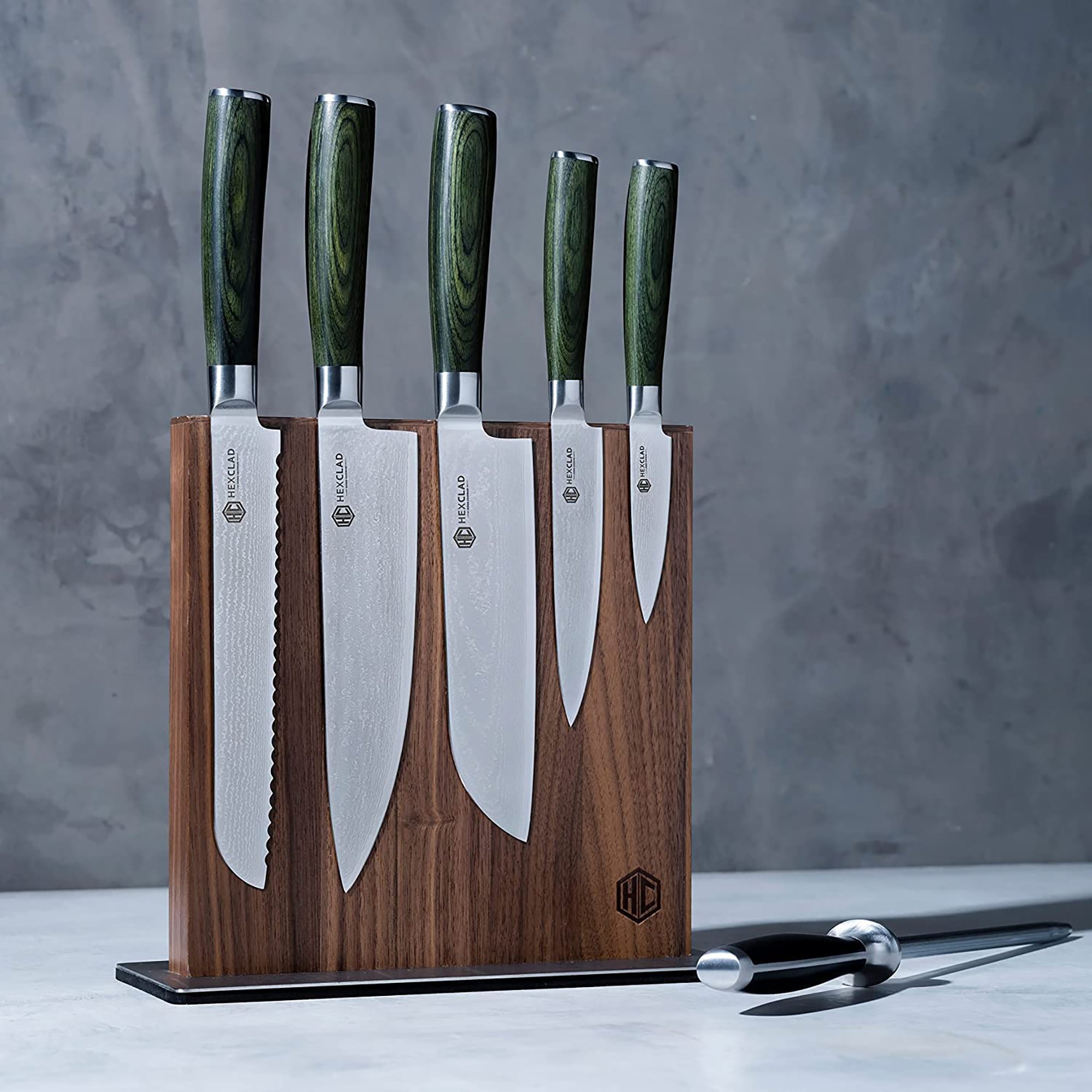
Carrying a cookware identity into new categories without diluting it.
One language, many objects.
Client · HexClad
Sector · Home & kitchen
Services · Strategy, industrial design, engineering, DFM
Engagement · Retained partnership
01
The challenge
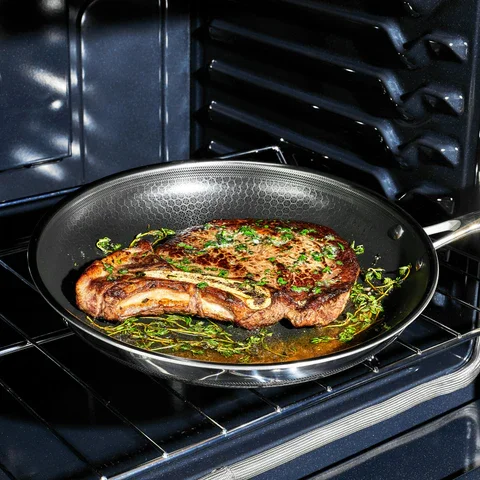
A brand with a strong first product faces a quiet trap. The thing that made it famous sets a bar every later object has to clear, and most extensions clear it by imitation, borrowing a colour or a finish and hoping the resemblance holds. HexClad's customers notice. They bought into a material standard, not a logo.
A bar set by the first product
Customers who notice the difference
Brand equity at risk each time
Manufacturable at HexClad scale
A premium price the category bears
No extra load on the cookware team
The approach
02
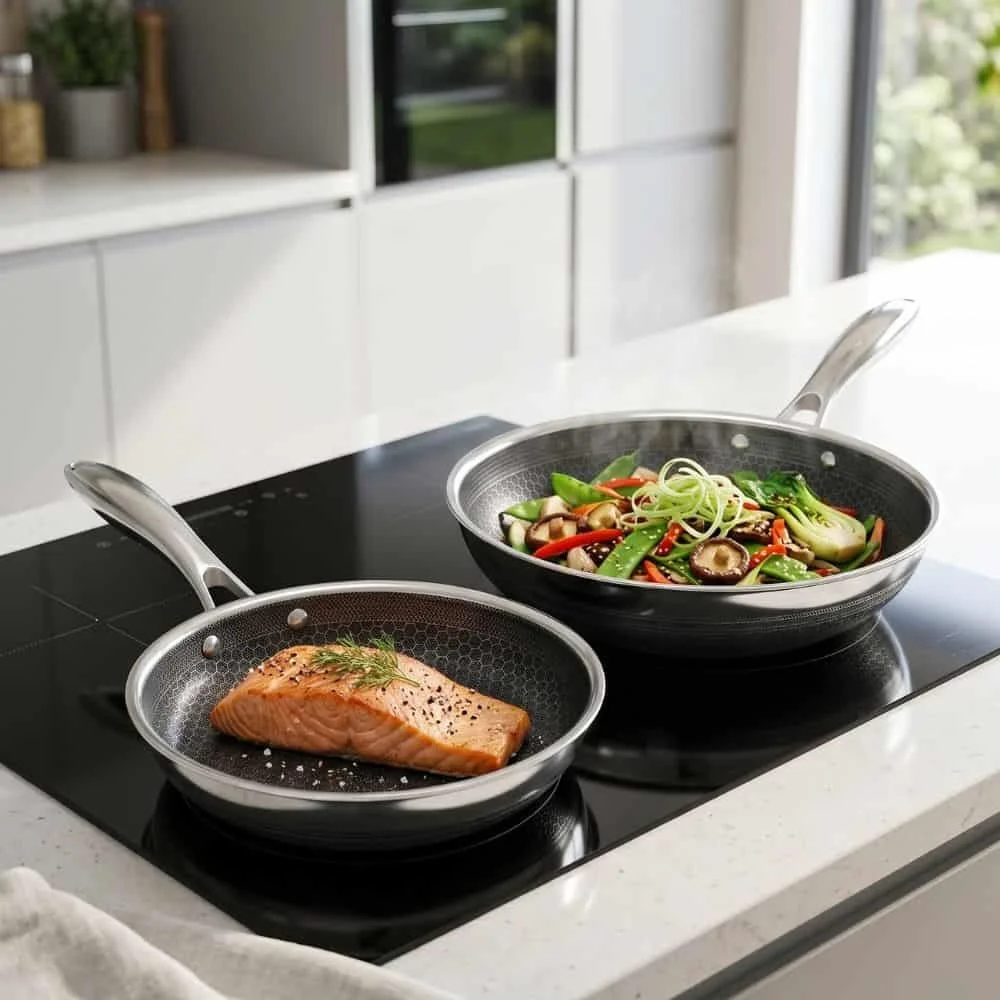
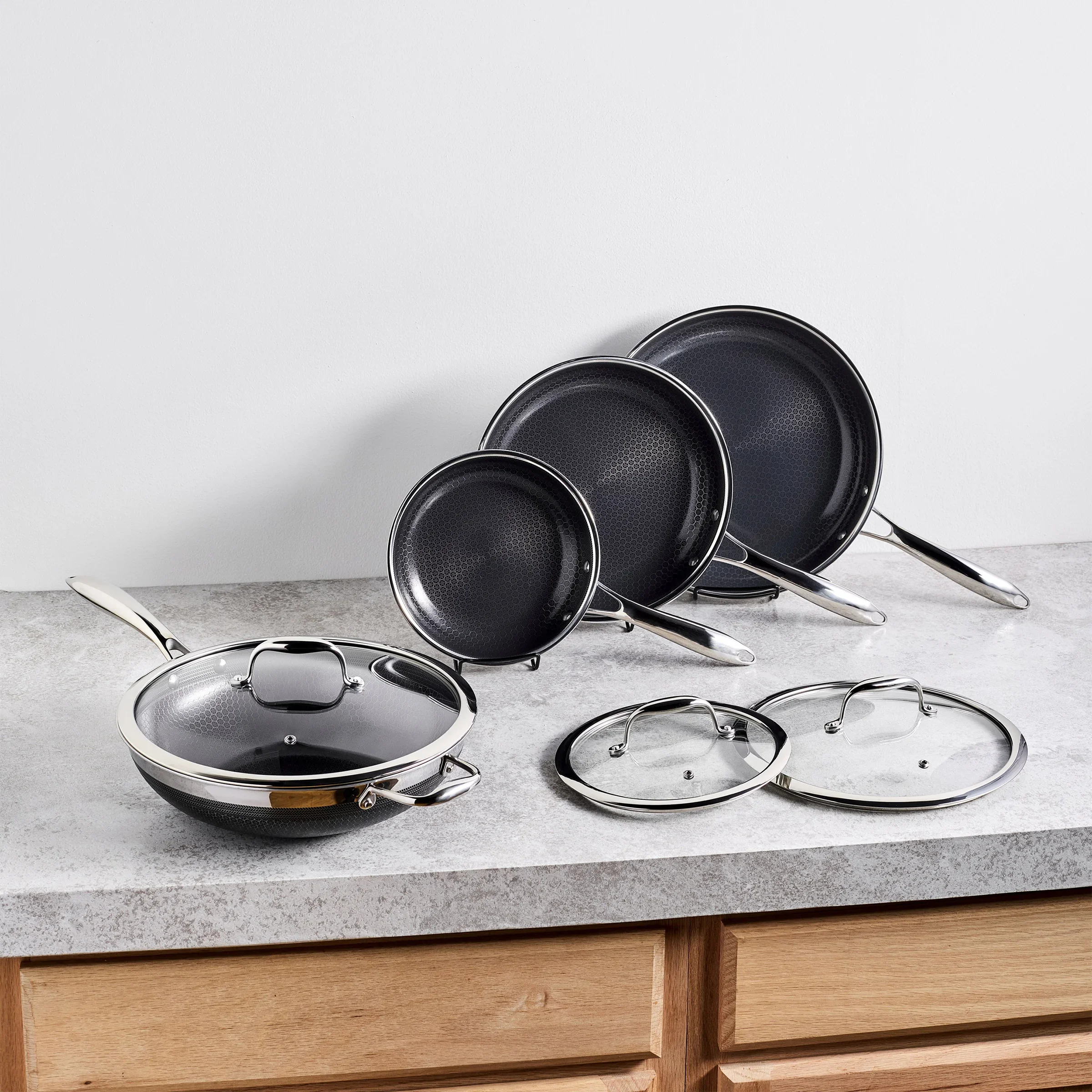
We built the partnership around one governing rule, the Belonging Test. Any new object, set on a worktop beside the hybrid pan, has to read as the same hand at a glance, before a customer has touched it or learned its name. Passing that test is not a styling exercise, it is an engineering one.
Discover the category
Define and commit to one concept
Design until the object works
Develop it for manufacture
Deliver the supply base
Hold the Material Standard
The outcome
03
Every programme now runs the same five stage path, from discovery through to the supply base that will build it, held together by a Material Standard codified early enough to survive the journey from first sketch to tooled part. The result is not one product but a method that scales across categories.
Tooled parts, first run included
One team, no vendor handoffs
A family that reads as one hand
One method across categories
Concept committed before detail
Material Standard held to tooling

04
Our role
Enki leads HexClad's product programmes as a single team, from category strategy through industrial design and mechanical engineering into design for manufacture and supplier selection. Each object goes from concept to tooled parts without being handed between separate design, engineering and manufacturing vendors.
“A brand is not a logo you apply to the next object, it is a standard every object has to meet.”
Ben Jones, Founder, Enki Product Development
Category and commercial strategy
Industrial design
Mechanical engineering
Design for manufacture
Supplier selection
Production support